Managing money is exhausting. You work hard all month, pay your bills on time, and somehow, by the 25th, the account looks dangerously low. We have all been there. It is incredibly frustrating to feel like you make decent money but have absolutely nothing to show for it.
Here is the truth: it is rarely the massive purchases that ruin a budget. You don’t go broke buying a house or a car; you know those are expensive. It is the small, mindless leaks. It’s the $4 coffees, the forgotten app subscriptions, and the quick online shopping trips when you are bored. If you want to stop living paycheck to paycheck, you don’t necessarily need a raise. You just need to change your daily friction. You need to make spending slightly harder and saving completely automatic.
Let’s walk through ten practical, real-world habits that will fundamentally change how your bank account looks at the end of the month.
Habit 1: Boss Your Money Around (Zero-Based Budgeting)
Most people just check their bank balance, see they have $500, and assume they are good to go for the weekend. That is a terrible way to manage money because that $500 probably needs to cover electricity and gas next week.
Instead, try zero-based budgeting. It sounds like boring accounting jargon, but it just means giving every single dollar a job before the month even starts . Whether a dollar goes toward rent, groceries, or a vacation fund, your “unassigned” money should be exactly zero.
Apps like YNAB (You Need A Budget) are amazing for this . They treat your money like digital cash envelopes . If you budget $100 for eating out, and you spend $120, the app forces you to manually move $20 from another category—like your clothing budget—to cover the difference . It physically hurts to pull money away from something else you wanted. That friction forces you to be honest with yourself daily.
Habit 2: Hunt Down Sneaky Subscriptions
We live in a world built on auto-renewals. Companies bank on the fact that you will sign up for a 14-day free trial and completely forget to cancel it. We all have that one streaming service or premium app we haven’t touched in six months but are still paying for.
Make it a habit on the first of every month to aggressively review your credit card statement. Look for anything recurring that you don’t actively use. Better yet, let technology do the dirty work. Tools like Rocket Money scan your connected accounts for recurring charges and lay them all out in front of you . You can often cancel them right through the app with a single tap . Dropping just two useless $15 subscriptions puts $360 back in your pocket over a year.
Habit 3: The 72-Hour Waiting Game
Online shopping is literally engineered to mess with your brain. Features like one-click checkout and saved credit card details remove all the friction from spending, giving you a quick dopamine hit when you buy something new .
To fight back, use the 72-hour rule. It is incredibly simple but highly effective. When you see something you want online, throw it in your digital shopping cart, but do not click buy. Close the browser tab. Wait three full days.
This forced delay gives your rational brain time to override the emotional urge . You will be shocked by how often you completely forget about the item. After 72 hours, if you still genuinely need it and have the cash, buy it. But most of the time, the urge just fades away. To make this even more effective, delete your saved credit card information from your browser. Forcing yourself to get off the couch and type in a 16-digit number is often enough to stop a bad purchase in its tracks.
Habit 4: Shop Your Fridge First (Reverse Meal Planning)
Food is the easiest place to bleed cash. The normal way we plan meals is backward. We find a recipe online, write a massive grocery list, and go buy everything. We end up spending $60 just to make one dinner, and half the weird ingredients sit in the fridge until they go bad.
Try reverse meal planning . Don’t start with a recipe. Start by staring into your pantry and freezer . Write down the heavy-hitting ingredients you already own—like that chicken breast in the freezer, the half bag of rice, and a can of black beans .
Now, find a recipe that uses those specific items. Your grocery run then becomes just a quick trip to grab a few missing fresh veggies or spices. It completely slashes your checkout bill and finally puts an end to the graveyard of wilted produce in your crisper drawer .
Habit 5: Let Apps Save Your Spare Change
Saving money requires willpower, and willpower eventually runs out. If you wait until the end of the month to save whatever is left over, you will probably save nothing. You need to automate the process so you don’t even have to think about it.
Loads of modern banking apps have a brilliant “round-up” feature . Every time you buy something, the app rounds the charge up to the nearest dollar and quietly moves the difference into a savings account . If you buy a sandwich for $6.30, the app charges you $7.00 and hides $0.70 in savings.
Apps like Acorns or Revolut do this perfectly . Because the amounts are so tiny, you literally never notice the money leaving your checking account. But those pennies quietly snowball. Over a year of buying groceries, gas, and coffee, you can easily build up hundreds of dollars without lifting a finger.
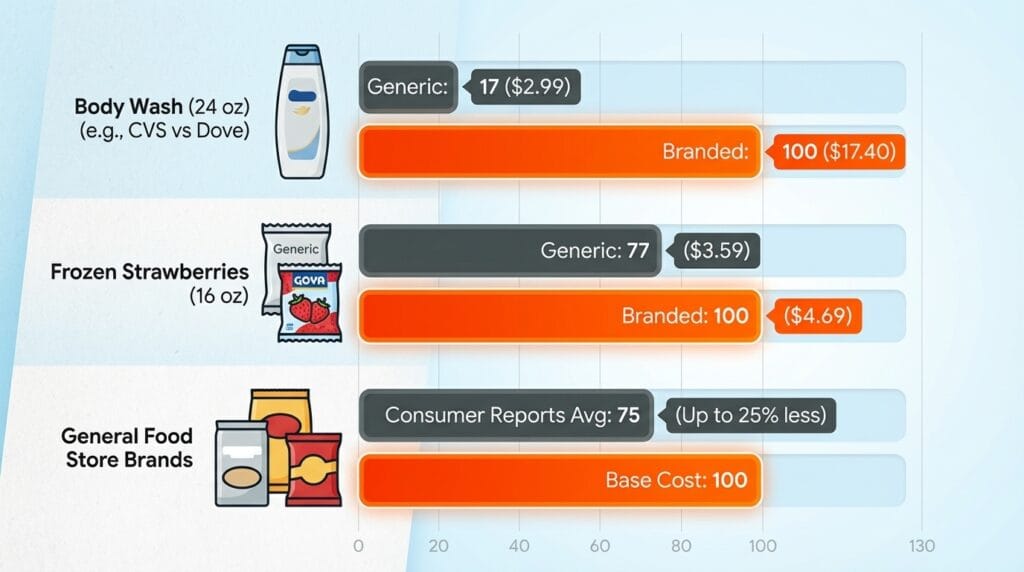
Habit 6: Stop Paying the “Brand Tax”
We are heavily conditioned to trust bright packaging and familiar logos. But brand loyalty is incredibly expensive. For a huge portion of household basics, you are just paying a premium for national television commercials, not a better product.
Over-the-counter medication is the best example. Regulatory bodies like the FDA require that generic pharmacy brands contain the exact same active ingredients as their expensive name-brand rivals. A generic pain reliever will fix your headache exactly the same way as the $10 name brand. The same logic applies to basic cleaning supplies, bleach, window cleaner, and frozen vegetables . Many store brands are literally made on the exact same manufacturing lines as the expensive stuff; they just slap a different sticker on the bottle at the end .
Habit 7: Suffer Through a “No-Spend” Weekend
If your budget is totally off the rails, you need a hard reset. A no-spend challenge is the best way to shock your system .
Pick one weekend this month and commit to spending absolutely zero discretionary money. You can pay your electric bill and eat the food already sitting in your house, but you cannot buy takeout, you cannot buy drinks at a bar, and you absolutely cannot browse Amazon.
It requires a little planning. You have to actively find free things to do . Go to a local park, visit a free museum, binge a show you already pay for, or finally clean out your garage . It forces you to realize how often you swipe your card just to entertain yourself. It is tough at first, but it breaks bad habits quickly.
Habit 8: Put Your Budget on Your Home Screen
Financial anxiety makes us hide from our problems. If you know you are spending too much, you naturally stop logging into your banking app. You just cross your fingers and hope the card doesn’t decline.
You need to engineer accountability. If your budgeting app offers a mobile widget, place it directly on your phone’s primary home screen. Put it right next to your messages and social media icons.
Every single time you unlock your phone, you are forced to see exactly how much money you have left to spend. It is a brilliant, highly annoying reminder that works. When you are standing in a store holding a shirt you don’t need, seeing a low budget bar right on your screen acts as an immediate psychological deterrent.
Habit 9: Calculate the “Cost Per Use”
This is a mental shift that will totally change how you view expensive items. Before you buy anything that costs a decent amount of money, divide the price by the number of times you realistically expect to use it.
For example, a $200 winter coat might seem painfully expensive. But if you live in a cold climate and wear it 100 times a year for five years, the cost per use is just 40 cents. That is a fantastic investment.
Conversely, a $60 trendy outfit for a specific party that you will only wear once has a terrible cost per use. This habit stops you from hoarding cheap junk that falls apart quickly and prevents you from buying expensive things that just sit in your closet gathering dust.
Habit 10: Stack Cash-Back Like Crazy
Finally, for the things you absolutely have to buy, never leave free money on the table. Make it a strict habit to use cash-back browser extensions.
Platforms like Rakuten, Capital One Shopping, or Honey run quietly in the background of your web browser. When you hit a checkout page, they automatically scan the internet for promo codes and offer you a percentage of your purchase back as cash. They get a kickback from the retailer for sending you there, and they share a piece of it with you. You don’t have to change your shopping behavior at all. You just click a single button before checking out, and over time, you get a nice little rebate check sent straight to your bank account.
Moving Forward
Building a solid financial foundation rarely happens overnight. It is simply the result of applying gentle, consistent pressure to your daily routines. By adding a little friction to how you buy things—like waiting 72 hours—and removing friction from how you save, you naturally build a cushion.
Don’t try to overhaul your entire life tomorrow. Pick just two or three of these habits to try this week. Once they feel natural, come back and add another. Your bank account will thank you.